Mirror Lake Trail, Oregon: Summer Hiking and Winter Snow Travel
Snow, parking rules, wildfire conditions, and daylight can make Mirror Lake feel like a completely different trip from one season to the next.
We last checked the official sources on August 26, 2026. This guide is based on agency information and is not a firsthand trail report.
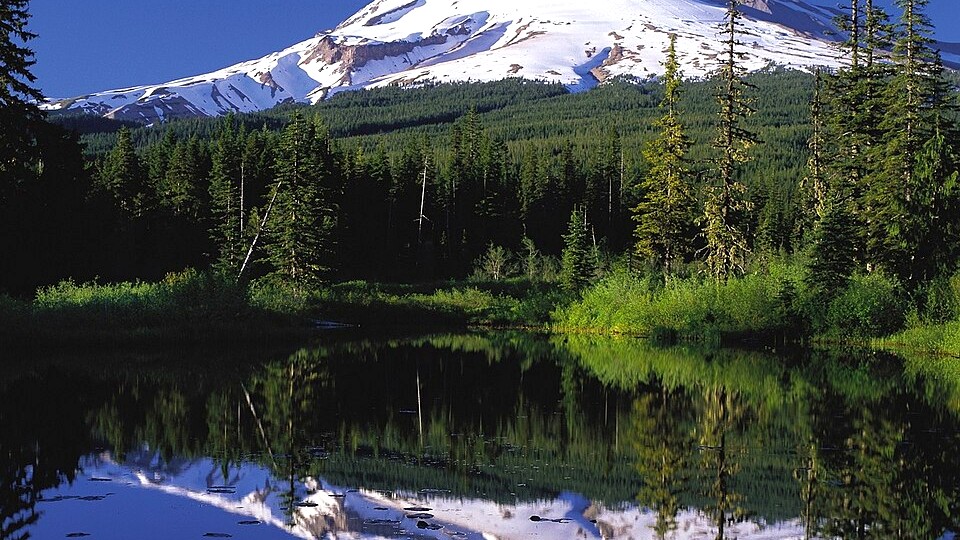
In summer, Mirror Lake offers a moderate forest hike to a small lake with a classic Mount Hood view. Photo: Oregon's Mt. Hood Territory – Public domain
TRAIL UPDATE – Mt. Hood National Forest currently reports extreme fire danger and active fire restrictions. Mirror Lake is not listed in the Grasshopper Fire closure, but forest alerts can change quickly. Check the official alert and trail pages before you leave.
Check before you go: Mirror Lake Trail #664 – Mirror Lake Sno-Park & Trailhead – Mt. Hood National Forest alerts
Choose the right season for your trip
Mirror Lake is a moderate summer hike, but conditions can change from day to day in spring and fall. In winter, it becomes an unmarked snow route. Plan for the season you will actually encounter instead of relying on a summer trail description.
|
Season |
Typical experience |
Parking rule |
Main planning question |
|
May 1-October 31 |
Open-water hiking when snow has melted |
$5 day-use fee or accepted recreation pass |
Are fire, smoke, and parking conditions manageable? |
|
Spring and fall |
A mix of mud, ice, snow, and open trail |
Check which seasonal parking rule applies |
Are you prepared for mud, ice, or patchy snow? |
|
November 1-April 30 |
Snowshoeing or cross-country travel |
Oregon Sno-Park permit |
Can you navigate without winter trail markers? |
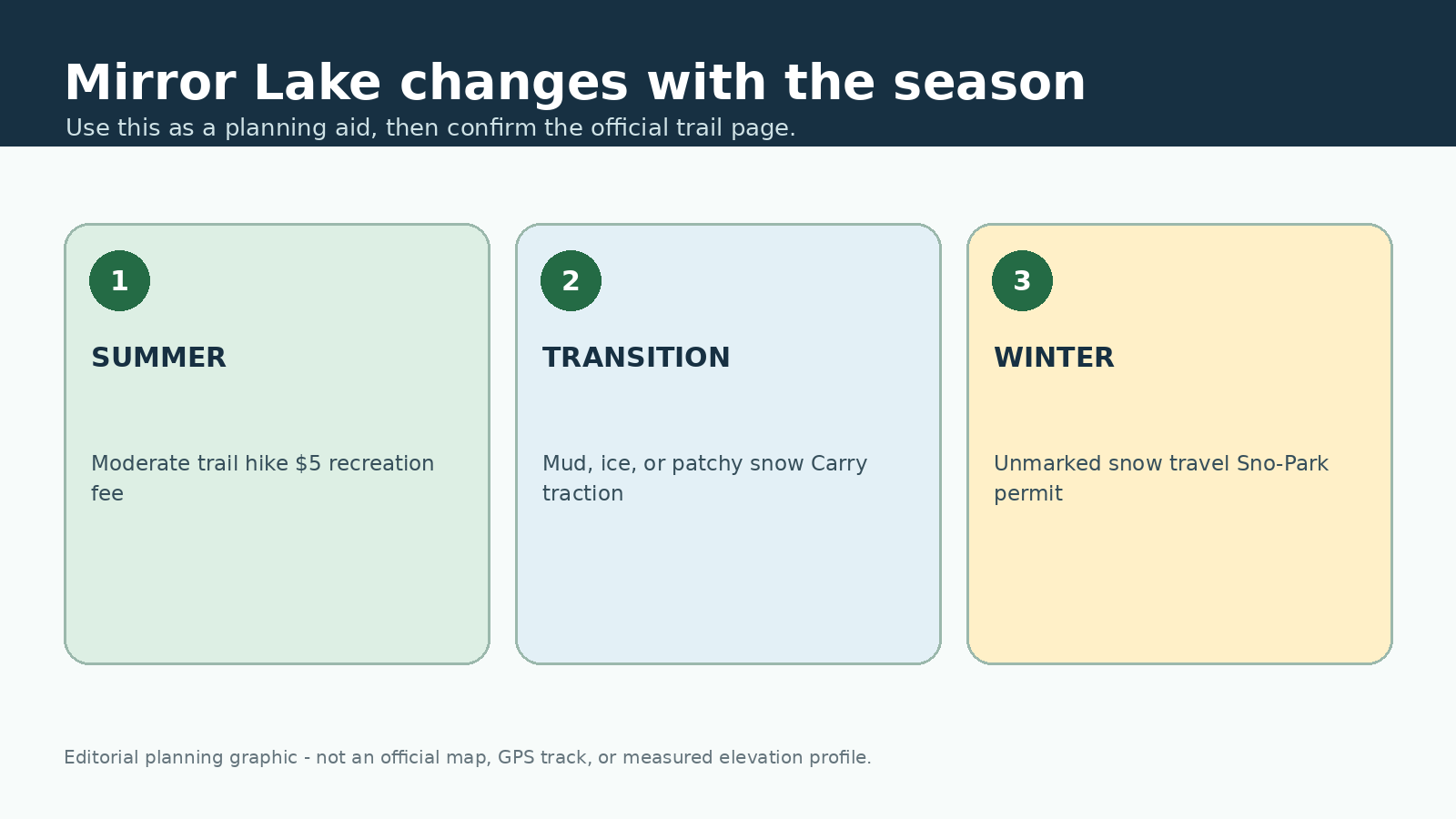
This original editorial graphic is meant only as a planning aid. It is not an official map, GPS track, or measured elevation profile.
Hiking to Mirror Lake in summer
The Forest Service lists 1.9 miles from the trailhead to Mirror Lake with 460 feet of climbing. The approach is wider than many forest trails and climbs at a steady, moderate grade. A narrower 0.4-mile path circles the lake.
A full out-and-back with the lake loop is roughly 4.2 to 4.4 miles, depending on the path and GPS method. Families should leave enough time and energy for the return rather than treating the lake as the end of the outing.
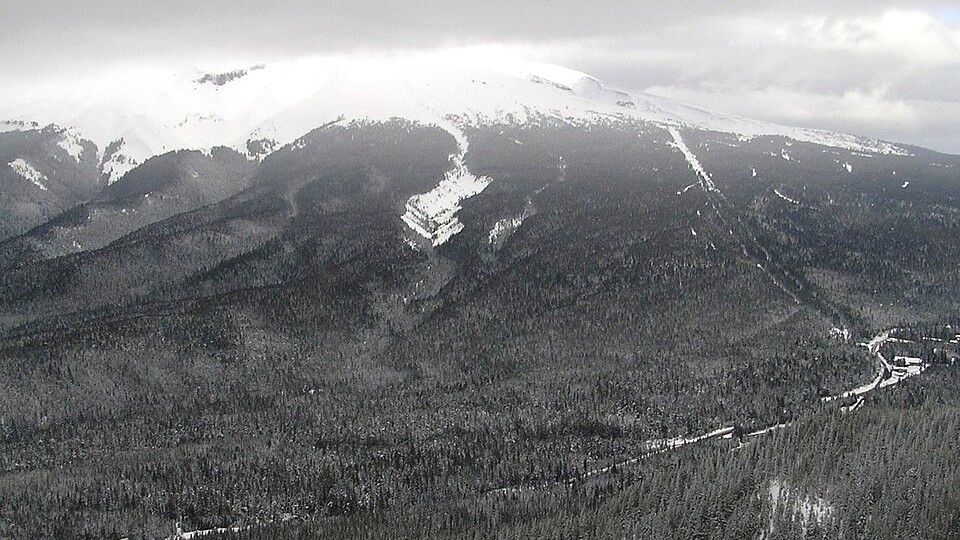
Winter turns the same destination into an unmarked snow-travel route that requires navigation and cold-weather skills. Photo: Ryan Snyder – CC BY 2.0
Winter changes the trip completely
Mirror Lake is popular for snowshoeing and cross-country skiing, but the Forest Service says there are no blue diamonds or other winter route markers. Snow can bury the summer trail and cover signs, turning the short approach into a navigation challenge.
Carry a GPS or map and compass, warm layers, traction or flotation suited to conditions, and a conservative turnaround time. Winter equipment does not replace avalanche awareness or judgment about storms, visibility, and daylight.
Parking, fees, and busy days
From May 1 through October 31, the trailhead requires a $5 day-use fee or accepted recreation pass. From November 1 through April 30, Oregon Sno-Park permit rules apply. Check the current trailhead page before relying on a pass purchased for another agency or season.
The trail is heavily visited. If the designated parking area is full, do not park along Highway 26 or block snow operations. Trillium Lake is another lake outing, while Forest Park offers a lower-elevation option near Portland. Check current access and conditions before heading to either one.
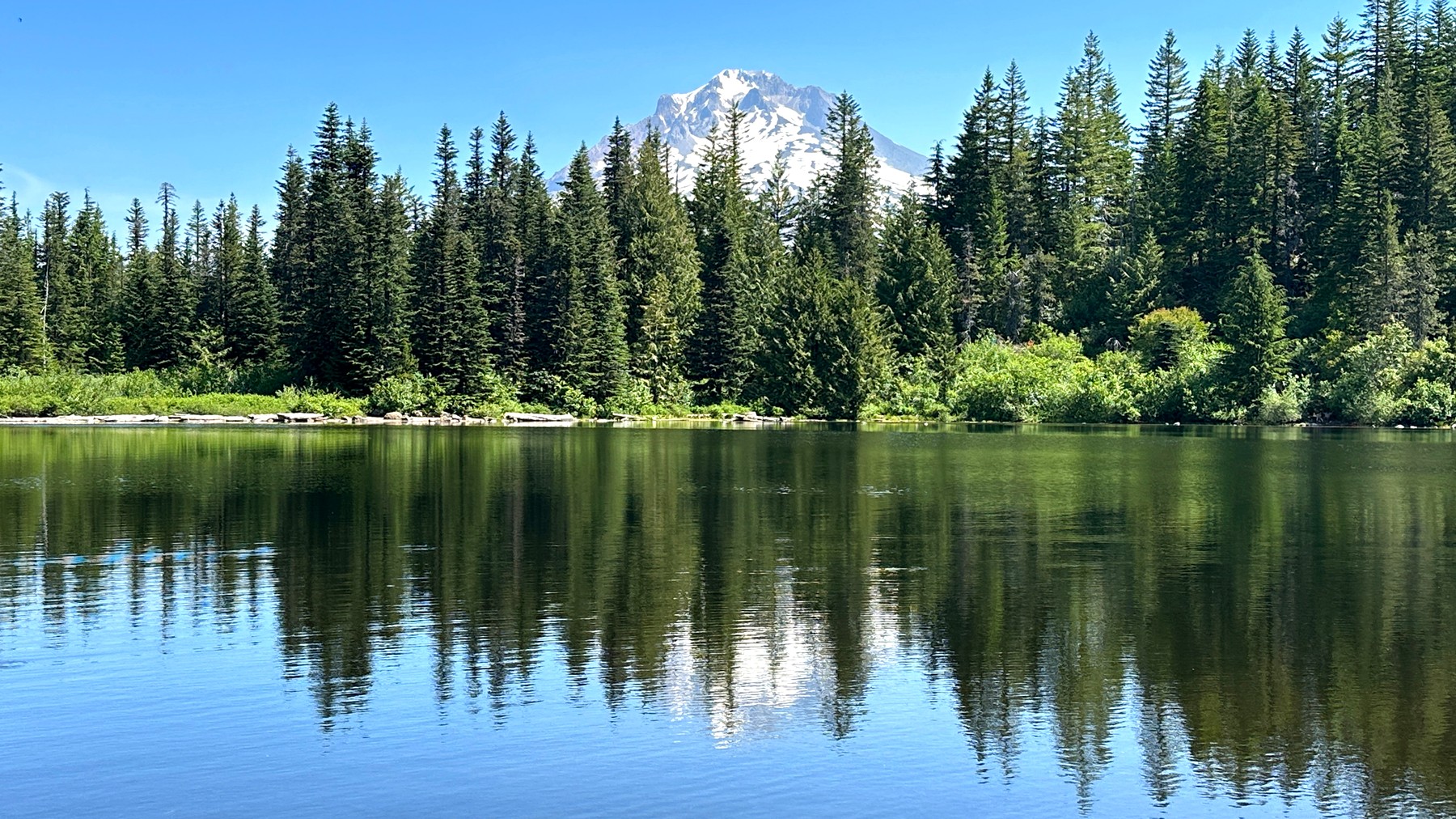
On a clear summer day, Mirror Lake offers open water and a Mount Hood view, although smoke, fire restrictions, or a full parking area can still affect the trip. Photo: jhvanwa – CC0 1.0
Fire season, dogs, and longer extensions
In summer, check for smoke, fire restrictions, and sudden closures. An open trail does not mean campfires are allowed. Confirm current dog and wilderness rules, keep pets under control near the shoreline, and pack out all waste.
The trail continues beyond Mirror Lake toward Tom Dick and Harry Mountain. That extension is longer, rougher, and steeper than the lake hike, with a very steep final section. If you want to continue, plan the extension in advance and allow enough time for the full return.
Frequently asked questions
How long is Mirror Lake Trail? The Forest Service lists 1.9 miles from the trailhead to the lake and a 0.4-mile lake loop. A full out-and-back with the loop is about 4.2 to 4.4 miles.
Which parking permit do I need? A $5 recreation fee or accepted pass applies May 1-October 31. Oregon Sno-Park permits apply November 1-April 30.
Is Mirror Lake an easy winter hike? No. Snow hides the summer route, and the Forest Service says winter markers are not installed. Navigation and winter travel skills are required.
More hiking guides
Sources and update notes
This guide is based on the public-agency pages linked below. We last checked access rules, fees, permits, fire restrictions, and closures on August 26, 2026. Check the relevant pages again before your trip. Mileage may vary with reroutes, side trips, turnaround points, and GPS methods. This is an independently researched guide, not a report from a recent hike.